
From Click to Altar: How Latino Families Are Redefining Digital Love
Four generations of Latinos share how online love transformed their family traditions
The Silent Revolution of Latino Digital Love
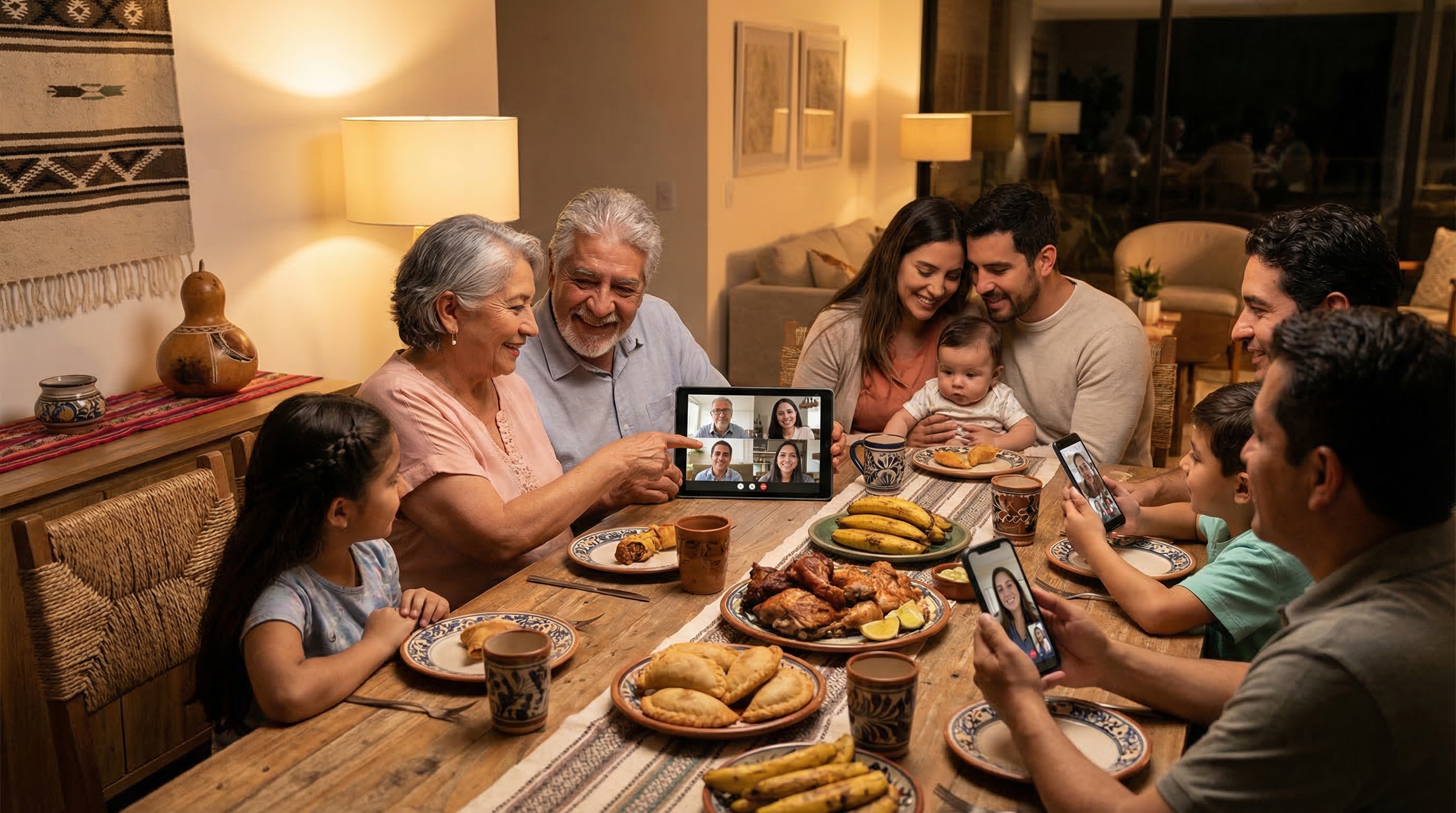
In a small home in Guadalajara, 78-year-old Doña Carmen holds her phone with trembling hands as she video calls her granddaughter's boyfriend. "Mijo, even though I didn't meet you in person first, I see in your eyes the same love my late husband had," she tells him, tears streaming down her face. This scene, unimaginable a decade ago, repeats itself in thousands of Latino households where online love stories are redefining our most sacred traditions.
Digital love is no longer an exception in our families; it has become a new way of weaving the bonds that unite us as a culture. From video introductions with Argentine mothers-in-law to Zoom serenades from Spain, Latino couples are creating unique rituals that honor our roots while embracing modernity.
When Technology Becomes Cupid for the Family
The Story of Alejandra and Roberto: Love That United Three Countries
Alejandra, a 32-year-old nurse in Madrid, never imagined that a message on a dating app would change not only her life, but the entire dynamic of her extended family. Roberto, a Mexican engineer working in Barcelona, reached out after reading on her profile: "I'm looking for someone who understands that Sundays are sacred family time."
"My first message wasn't 'How are you?' but rather 'Does your family also gather for dinner after Sunday mass?'" Roberto recalls with a smile. That question sparked a six-hour conversation about family traditions, their grandmothers' recipes, and the homesickness of living far from home.
But what was truly extraordinary about their story wasn't just their instant connection. When they decided to introduce themselves to their families via video call, something magical happened: both mothers, separated by an ocean, discovered that their mole recipes had the same secret their grandmothers had taught them. "It was like destiny had used technology to reunite two branches of the same family tree," says Alejandra's mother.
Today, married with a two-year-old daughter, they organize monthly virtual family reunions where three generations from Spain and Mexico share recipes, celebrate birthdays, and keep alive the traditions they thought distance had stolen.
Breaking Stereotypes: Real Testimonies
Carlos and Patricia, both 29, met on a platform specifically designed for finding love online among Latino professionals. He's a doctor in Miami with Cuban parents; she's a lawyer in Medellín. Their story challenges the myth that online love is superficial.
"Our first three dates were virtual, but each lasted four hours," Patricia shares. "We talked about everything: our fears, our dreams, the pressure of being the first generation to attend university in our families. When we finally met in person, we were already best friends."
What most impacted their families wasn't that they'd met online, but the depth of their connection. "My mom told me: 'In my day, we'd date for years before really knowing each other. You two already knew each other's souls before your first hug,'" Carlos remembers.
The New Digital Family Traditions
The Ritual of the First Video Call
Among Latino couples who form online, an almost sacred ritual has emerged: the first family video call. It's not just "meeting the parents"; it's an event that requires preparation, nerves, and often the blessing of several generations simultaneously.
María José, a family psychologist in Buenos Aires, has observed this phenomenon: "Families are creating new protocols. I've seen cases where the grandmother dresses up in her Sunday best to meet her granddaughter's boyfriend on Zoom, or where the father prepares a welcome speech for a video call. They're adapting our traditions to the digital world without losing their essence."
Hybrid Weddings: In-Person and Virtual
Laura and Diego, who met during the pandemic on a dating app, decided to marry in a ceremony combining the best of both worlds. He was in Bogotá with his family; she was in Valencia with hers. The ceremony was livestreamed so both families could participate.
"It was moving to see my Colombian grandmother crying at the same moment Diego's Spanish grandmother did, each in front of their screen but sharing the same moment," Laura recalls. "The priest blessed the union from Bogotá, but both families shouted 'Long live the newlyweds!' in unison."
These hybrid celebrations are becoming popular among Latinos living in different countries who want to keep their families united during life's most important moments.
The Unique Challenges of Latino Digital Love
Navigating Generational Expectations
Not all families have easily embraced these new forms of love. Teresa, 35 and a single mother in Barcelona, faced resistance when she announced she was dating someone she'd met online.
"My mother would say: 'How can you trust someone you didn't meet at church or a family gathering?' But when she saw how Raúl treated me, how he respected our traditions and made an effort to learn our Catalan customs, she changed her mind," Teresa explains.
Online dating success in Latino families often depends on how couples integrate traditional expectations with modern realities. Raúl, originally from Puebla, learned Catalan to speak with Teresa's grandparents—a gesture that won over the entire family.
The Distance and Migration Factor
Many Latinos living far from their home countries find in digital platforms a way to connect not just with love, but with their cultural identity. This is the case for Andrés, a Colombian engineer in Milan, and Sofía, an Argentine designer in London.
"We found each other because we both were looking for someone who understood what it means to be Latino in Europe," Sofía explains. "In our early conversations, we talked more about missing dulce de leche and Sunday family time than about our jobs."
Their relationship strengthened by sharing traditions across the distance: they'd cook the same dish every Sunday while connecting by video, creating a sense of shared home despite living in different countries.
The Role of Extended Family in Digital Love
Tech-Savvy Grandmothers and Connected Aunts
One of the most beautiful transformations has been watching family matriarchs adapt technology to keep their love-expanded families connected. Doña Esperanza, 82, in Quito, learned to use WhatsApp specifically to get to know her granddaughter's Spanish boyfriend better.
"At first, technology scared me, but when I realized I could talk to Miguel every day, learn his customs, and even teach him to make locro by video call, I understood this was another way of creating family," says Doña Esperanza.
Those daily WhatsApp conversations became the cultural bridge that allowed Miguel to fall not just for his girlfriend, but for the entire Ecuadorian family that had shaped her.
Cousins as Cultural Connectors
In many successful online love stories, younger cousins and siblings have become digital "cultural translators." They're the ones who help foreign partners understand family jokes, inside codes, and region-specific traditions.
Javier, 24, in Monterrey, became the digital guide for his sister's Peruvian boyfriend: "I explained to him through chat what each expression my dad used meant, I taught him the songs we always sing at family gatherings, and even sent him videos of how to dance norteño cumbia," he says with a laugh.
The Most Touching Testimonies
Love in Pandemic Times
Carmen and Eduardo met online in March 2020, right when lockdown began. She's a teacher in Seville; he's a chef in Mexico City. Their entire courtship happened on screens for eight months before they could meet in person.
"We lived together through uncertainty, fear, and hope. When borders closed, our families came together virtually to support us. My Seville mother and his Mexican mother became friends through WhatsApp," Carmen shares.
When she finally traveled to Mexico to meet Eduardo in person, his entire extended family greeted her at the airport. "It was like coming home after a very long journey, even though I'd never been there before," she describes.
The Reunion of Lost Traditions
Alicia, descendant of Spanish immigrants in Argentina, unexpectedly found a way to reconnect with her roots through online dating. Through an app, she met Pablo, an Andalusian man living in Buenos Aires for work.
"My family had lost many Spanish traditions over the generations. Through Pablo, I didn't just find love—I recovered recipes, celebrations, and even the accent of my great-grandparents," Alicia explains.
Their wedding was a celebration of cultural reunion, blending Argentine tangos with Andalusian flamenco, Buenos Aires empanadas with Iberian ham, creating a new family tradition that honored both sides of her heritage.
The Impact on New Generations
Children Growing Up with Digital Aunts and Uncles
Children of these couples who met online are growing up in naturally multicultural and technologically connected families. Valentina, 8, daughter of a Mexican-Spanish couple who met online, speaks fluently about "her grandparents on screen" and considers it normal to have cousins in three different countries.
"It's completely natural for her to have a digital extended family. She celebrates Día de Muertos with her Mexican grandparents by video call and New Year's Eve with the Spanish ones. Her cultural identity is rich and multiple," her mother explains.
Preserving Languages and Traditions
These hybrid families are finding creative ways to keep multiple languages and traditions alive. The testimonies show that children from these unions aren't just bilingual—they often act as cultural ambassadors between the different branches of their extended family.
Advice from Successful Couples
The Importance of Cultural Transparency
All the couples interviewed agree that honesty about their family traditions from the start was key to their success. "Don't hide your customs thinking they might seem strange. If someone doesn't respect them, they're not the right person," Roberto advises.
Involve Family from the Beginning
The most successful stories include families that actively participated in the getting-to-know process. "My parents started following my boyfriend's family Instagram long before meeting them. When we finally got together in person, there was already a connection established," Patricia shares.
Create New Traditions Together
The happiest couples don't just respect existing traditions—they create new ones that reflect their unique story. Laura and Diego established "Sunday dinner calls" where both families cook the same dish and eat "together" by video call.
Looking Toward the Future
The online love stories of Latino families are writing a new chapter in our cultural traditions. They're not replacing traditional ways of finding love; they're expanding them, enriching them, and adapting them to an increasingly connected world.
These testimonies prove that digital love can be as deep, authentic, and lasting as any other. More importantly, it's building cultural bridges, preserving traditions, and forming families that celebrate both heritage and innovation.
The future of Latino love is hybrid: it honors the past while embracing the infinite possibilities of the digital present. And on every screen, in every family video call, in every goodnight message sent across continents, a new definition of what it means to build a family in the 21st century is being written.
Are you ready to write your own love story that unites traditions and modernity? Your extended family might be waiting on the other side of the screen.
Read more
Integrating Family into Love: A New Perspective
Discover how integrating family can enrich your relationships and bring true love.
Love in Diversity: Exploring Dating Culture in the Latin World
Discover how the richness of Latin culture transforms dating and love in every corner of our community.
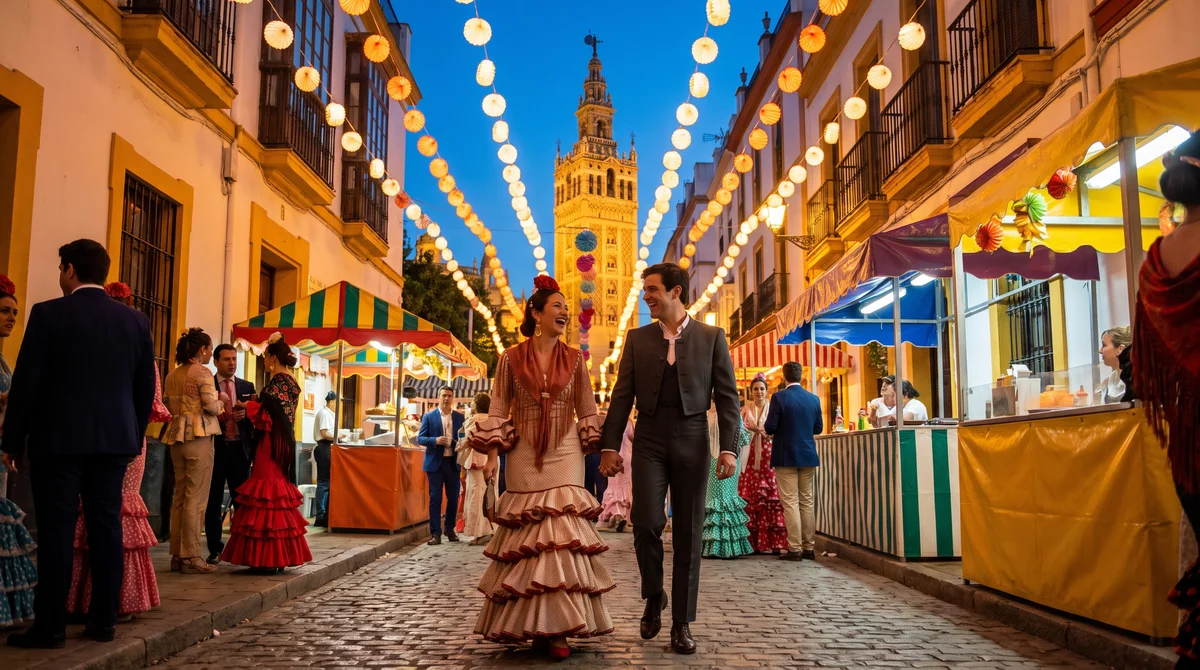
Discover Love in Seville: A Journey of Passions and Traditions
Explore how Seville's rich culture and traditions can lead you to true love around every corner of this magical city.