
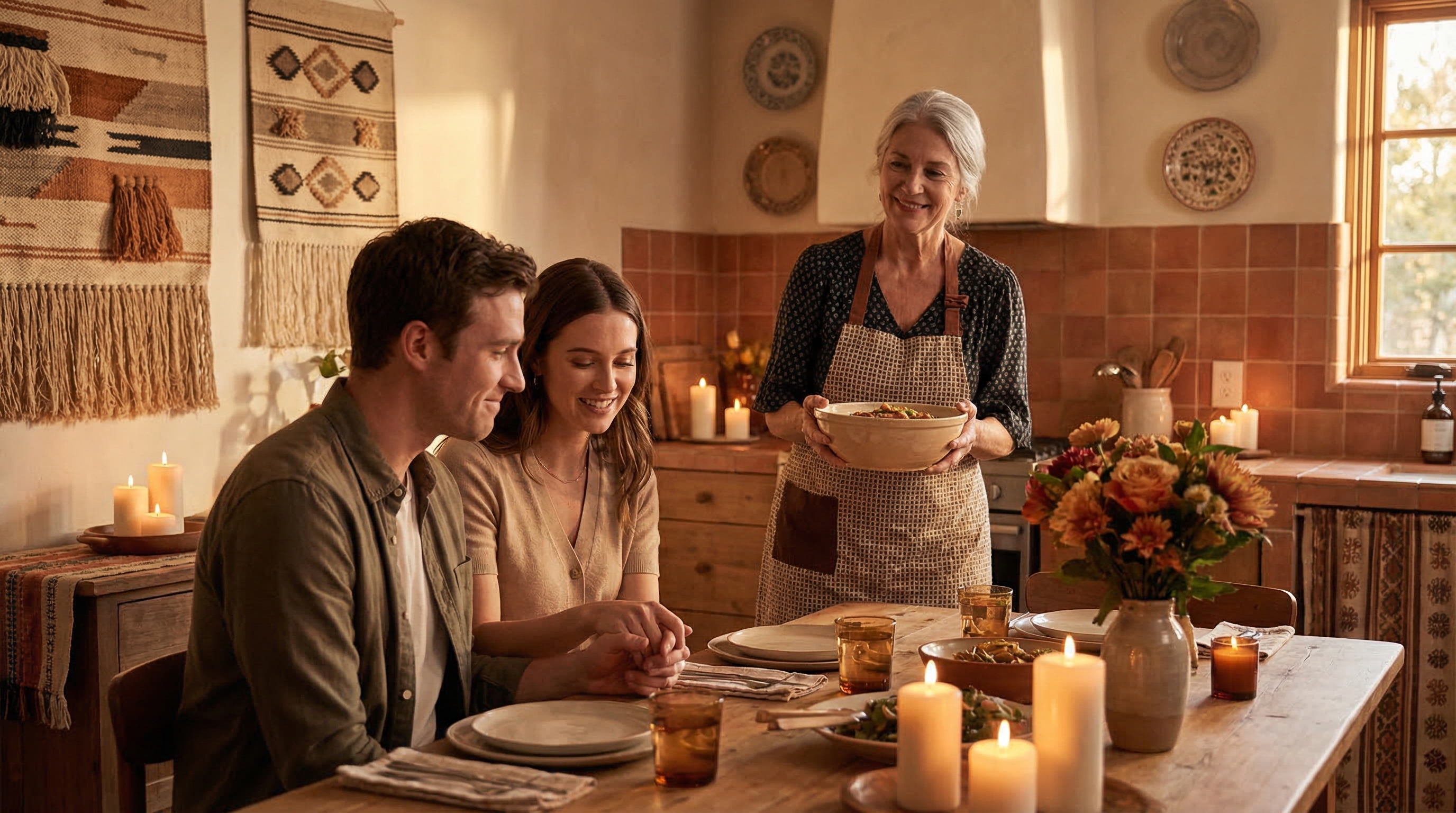
How to Introduce Your Partner to Your Latin Family: A Complete Guide for This Big Step
Heart to Heart: Navigating Family Traditions When You Find True Love
Introduction: The Moment That Defines Everything
In Latin families, introducing your partner isn't simply "taking them out to dinner" with mom. It's a ritual loaded with meaning, expectations, and yes, a bit of nervousness. When you've found a serious partner through Latin dating and feel the relationship is heading somewhere real, your heart races faster: the family introduction moment has arrived.
This article will guide you through this sacred process with the warmth and authenticity that characterizes our cultures. Because we know that for you, your family isn't just people—they're the guardians of your identity, your values, and your history.
Understanding the Context: Why Latin Family Is So Important
Family as Sacred Core
Unlike cultures where independence is celebrated early on, in our Latin families, multigenerational bonds are the heart of everything. A serious relationship in Latin culture isn't just between two people; it's the union of two family stories, two legacies, two ways of understanding love and life.
When you're looking to find a serious partner through Hispanic dating apps, you're not just seeking someone who loves you. You're seeking someone who can understand and respect where you come from. Someone comfortable at a table where grandma runs the conversation, where food flows abundantly, and where questions are direct because affection is direct too.
Regional Differences Matter
It's not the same introducing your partner in a traditional Spanish family from Seville as it is in a Mexican family from Monterrey or a Colombian family from Medellín. Each region has its own codes:
In Spain, especially regions like Andalucía or Catalonia, there's a certain intellectual and literary pride. Your family will want to know your future plans, your career, your stability. But there's warmth too: wine flows, conversation is passionate, and ultimately what matters is that you bring someone to share life with.
In Mexico, family is matriarchal in many ways. Mom and grandma have unspoken veto power. Expect questions about your intentions, your religious values (even if you don't practice), and your ability to support a family. But it comes with incredible warmth: the food will be abundant, laughter genuine, and if you pass the test, you'll be integrated as part of the tribe.
In Colombia, especially in cities like Bogotá or Cali, there's a blend of modernity and tradition. The family wants to know you're serious, that you have stability, but they also value humor and the ability to enjoy life. Gatherings are festive; don't expect a serious dinner, expect a celebration.
In Argentina, particularly Buenos Aires, there's a certain sophistication. Your family will want intelligent conversation, cultural curiosity, and authenticity. They won't tolerate phoniness, but when they accept you, they do completely. Prepare good wine and deep conversations.
Before the Introduction: Internal Preparation
Ask Yourself the Right Questions
Before making reservations or warning mom, be honest with yourself:
Is this relationship really ready? Don't introduce your partner to the family in the first weeks of Latin dating. You need to know this has real potential to become something serious, because once your family meets her, she becomes part of your family narrative.
Has your partner understood the family expectations? If you found your partner through an online dating app, they probably understand family is important, but do they really know what that means? Have they prepared their heart?
What's your true intention? Are you asking the family to simply "meet her" or are you seeking their blessing for a serious relationship? This distinction changes everything.
Have an Adult Conversation With Your Partner
This conversation is crucial. It's not casual. Sit with your partner in a quiet place and discuss:
Your family's values: If you come from a practicing religious family and your partner doesn't, this needs discussion. If your family values absolute loyalty and your partner has a complicated relationship with her own family, that matters too.
The level of emotional intensity: Latin families are passionate. They don't filter. If your mother thinks something, she'll say it. If your aunt believes you should get married soon, she'll ask about it. Prepare your partner so emotional intensity doesn't confuse her.
The questions that will come: At a Latin family dinner, expect questions about: salary, marriage plans, whether you want kids, what religion you practice, where you live, why you left your family (if applicable), what your mom does. This isn't invasion for us; it's genuine interest.
Your role as intermediary: You're the translator between contexts. You need to be prepared to defend your partner respectfully when necessary, but also to remind her this is your people and intensity comes from love.
Perfect Timing: When to Make the Introduction
Six Months Minimum
Unless you're seriously considering marriage, wait at least six months of dating before the big introduction. This gives you time to:
- Confirm this is serious
- Understand your partner's values more deeply
- Prepare your family for someone special arriving
- Ensure your partner is ready for the intensity
Find the Natural Moment, Not a Forced One
Don't make the introduction during an important celebration (Christmas, your mother's birthday). These moments are already emotionally charged. Better a special dinner where the focus is getting to know each other, not competing with 47 other people and traditions.
One exception: If you move to another city and your partner comes with you, the introduction becomes more inevitable. In that case, do it with clear intention: not as "this is my partner who just arrived," but as "I want my family to know the person important to me."
Setting the Stage: Speaking With Your Family
The First Announcement
Don't surprise your family. A week before, talk with them (especially your mother or the family matriarch/patriarch):
"Mom, there's someone in my life who's very important to me. I'd like you to meet her. We're thinking of having dinner next Saturday. This is a serious relationship and I hope you'll give her a chance to know our world."
This simple statement communicates:
- Respect for the process
- Seriousness of the relationship
- Your hope she'll be welcomed
- This isn't a surprise or casual thing
Be Transparent About Her Background
If your partner is from another region or country, get ahead of questions:
"Mom, she's from Colombia" or "Her family is from Argentina, but she grew up in Madrid." This prevents your family feeling surprised or thinking you're hiding something.
If your partner has special circumstances (divorced, children from a previous relationship, significant age difference), tell them yourself in a way that shows you've thought it through. That way the family doesn't feel deceived.
Manage Expectations
If your family is traditional and tends to ask about marriage quickly, prepare them:
"We're in the getting-to-know-each-other stage. I'd appreciate if you avoid marriage questions because we want it to happen organically."
Most Latin families will respect this boundary if you establish it with clarity and affection.
Planning the Introduction: The Ideal Scenario
Where to Have the Introduction
At family home: It's traditional in Latin cultures. Your mom will want to cook, show her table, serve with her own hands. This is love. Let it happen. Your partner will see where you truly come from.
At a restaurant: If the house is too small, the family too large, or you prefer neutral ground, that's fine. Choose somewhere with good food (important in Latin culture) but not overly formal atmosphere. A loud restaurant where you have to shout doesn't work.
During a shared activity: In some families, especially in cities like Barcelona or Buenos Aires, there's tradition for informal gatherings: a walk, a market visit, a café. This takes pressure off the formal introduction.
Timing Matters
In Spain and Latin America, important meals are late. Not at 1 p.m. but around 2 or 2:30 p.m. Dinners are even later, around 8:30 or 9 p.m. Respect these times; your family will have expectations about arrival time, duration, and meal timing.
Invite Only Who Should Be There
First mistake: inviting EVERYONE. If you're from a large family (like most of us), this is overwhelming. Keep the introduction intimate:
- Your mother/father (or both)
- One sibling maximum
- If the family is matriarchal, grandmother
- One very close aunt if unavoidable
The rest can come later, once your partner is more integrated. In serious relationships leading to marriage, there will be many more opportunities to meet other family members.
Introduction Day: Moment by Moment
Before You Arrive
Talk with your partner before entering:
"Thank you for doing this. My family is [warm/intense/traditional]. They'll ask questions. Some might seem invasive; there's no bad intention. Here we show closeness through curiosity. My mom will cook a lot; this is her love language. My aunt will probably make a joke about marriage; it's just humor, not real pressure."
Give her a hand squeeze or a kiss. Remember why she's here: because you love her and want her part of your world.
Arrival: First 10 Minutes
This is the most important moment. Your partner is nervous. Your family is nervous. You're the bridge.
For your partner:
- Bring something: flowers for the host (universal in Latin cultures), a bottle of wine if dining at home, dessert if it's dinner.
- Dress appropriately: doesn't need to be formal, but show you respect the moment.
- Smile genuinely. Nervousness is visible; authenticity overcomes it.
For your family:
- Introduce formally: "Mom, I want to introduce you to [name]. She's very important in my life."
- Don't leave your partner alone with the family to "help in the kitchen." Stay present, especially the first 30 minutes.
- Watch body language. If your mother stiffens, create space for her to get to know your partner on her own terms.
During the Meal: Keeping Conversation Going
Latin family meals have rhythm. Generally:
First 15-20 minutes: Introductions, explanations about jobs, cities. It's superficial but necessary.
15-45 minutes: Questions begin. Here's where you need to pay attention:
If your mother asks "What are your intentions with my child?", your partner might respond: "I love them and want to explore this stage of our lives together. I'm honored to meet your family."
If someone asks about religion, finances, or sensitive topics, YOU can intervene respectfully: "That's something we've discussed, but I appreciate the interest." Don't leave your partner defensive.
45 minutes onward: If things go well, conversation becomes more relaxed. Family stories, laughter, your partner begins feeling comfortable. This is excellent.
Handling Uncomfortable Moments
If someone makes a joke about your partner: Laugh, but redirect with "Yeah, and what I love about her is..." Redirect with affection.
If they question the relationship: "It takes time, but we know where we're heading." Don't justify.
If your partner says something your family doesn't understand culturally: Translate with love. "What she means is that in her family they celebrate like this... it's different but it's beautiful, right?"
If your partner's Spanish isn't perfect: This isn't a problem. If it's something funny, laugh together. Authenticity beats linguistic perfection.
Ideal Duration
First meeting: 3-4 hours maximum. Long enough for a meal, conversation, and everyone comfortable, but not so long that social fatigue creates tension.
After the Introduction: Following Up
Talk With Your Partner
Check in privately right after:
"How did you feel? Was there anything that worried you? Is there anything you want me to clarify with my family?"
Her feedback is valuable. If something went wrong, better to know and fix it.
Talk With Your Family
Separately (not as a group), ask key members what they thought. Listen without being defensive. If there are legitimate concerns ("I don't see a future plan"), talk with your partner. If it's prejudice ("I don't like them because they're not from our neighborhood"), you can let it go knowing time will change opinions.
Create Moments of Positive Repetition
Don't wait for another formal introduction. Small moments create normalcy:
- Invite your partner to a casual family lunch
- Take her to events where the family will be (soccer game, church if it's tradition)
- Ask your mom to teach her a family recipe
This gradually integrates your partner without formal presentation pressure.
If the Introduction Goes Badly: Navigating Rough Waters
Negative Reactions Exist
Sometimes, for reasons you won't fully understand, your family won't accept your partner. This could be because of:
- Prejudice (about her origin, religion, social class)
- Lack of something specific in her profile (doesn't have kids, divorced, etc.)
- Family power dynamics (your mom feels she's losing you)
- Genuine cultural differences
Your Responsibility
As an adult in a serious relationship:
Don't abandon your partner for family. If you truly love this person and see a future together, protect her from disapproval. This doesn't mean ignoring your family, but it means setting clear boundaries:
"I respect my family, but I also respect [name]. I hope you can learn to get along. If that's not possible, I understand, but she's not a point of negotiation."
Don't completely abandon your family. Family relationships matter. Seek bridges, offer opportunities for minds to change, but don't make your partner responsible for winning family approval.
Create your own family with your partner. If blood doesn't accept you, family you choose also counts. In our Latin cultures, the concept of family is flexible: it's not just who gave you life, but who accompanies you through it.
When the Introduction Goes WELL: Solidifying the Relationship
Acknowledge the Milestones
If your family accepted your partner, celebrate:
- Your mom probably already asks how her week went
- Someone suggests she spend the night
- Your grandmother starts referring to her as "your partner" in conversations
- She gets invited to family events without you necessarily present
These are signs of genuine acceptance.
Gradual Integration
Now that you've passed the introduction, the relationship with family will evolve naturally:
- Christmases together
- Family trips
- Participation in family decisions
- Eventually, introductions to grandmothers, distant cousins, uncles living far away
Each step is natural, not forced.
Deeper Conversations Come Later
Once your partner is part of the circle, your family will begin honest conversations:
- About money and joint finances
- About where you'll live
- About children (if that's the plan)
- About how you'll handle cultural differences in the future
These conversations signal your family sees her as part of the long-term plan.
Special Considerations: Unique Factors in Latin Relationships
When Your Partner Is From Another Country or Hispanic Region
If you met your partner through online Latin dating and she's from another Hispanic region (an Argentine and a Mexican, a Spaniard and a Colombian), it adds another layer:
Family might romanticize it ("How exciting, international love") or question it ("Isn't there anyone in your own city?").
Be clear: "I found her because I was looking for someone serious, someone who understands our culture. That she's from elsewhere is coincidence; what matters is who she is."
When Your Partner Isn't Latin
If you found a serious partner who doesn't share your cultural background, the introduction requires additional education:
Prepare your partner for specific values:
- The importance of loyalty
- The expansive nature of "family" (might include childhood friends as brothers/sisters)
- The role of food in celebration
- Emotional communication, even when intense
Prepare your family for differences:
- Why she celebrates Christmas differently
- Why her relationship with her family is more distant
- Why she has different privacy boundaries
Mutual education is key.
When There Are Religious Differences
If your family is practicing religious and your partner isn't (or practices differently), this requires clear conversation BEFORE introduction:
Talk with your family: "She doesn't share our faith, but respects our beliefs. I hope you'll respect hers too."
Talk with your partner: "Religion is important to my family. We won't ask you to participate, but we'll appreciate your respect."
This prevents dinner conflicts.
The Journey: From Latin Dating to Family Integration
Final Reflection
Introducing your partner to family is an act of courage. It means:
- Acknowledging this relationship is serious
- Inviting your past (your family) to meet your future (your partner)
- Creating space for two different worlds to meet
- Trusting love transcends differences
There's no "perfect" introduction. There's an authentic one: where you, your partner, and your family meet as you are, with all the messiness, warmth, intensity and love that characterizes our Latin cultures.
The Truth About Latin Family
Yes, it's intense. Yes, they ask a lot. Yes, the uncle makes inappropriate comments. Yes, mom doubts before accepting.
But also: when they accept, they accept completely. Your partner won't just be "the girlfriend"; she'll become part of the constellation of people who define you.
That's what finding a serious partner means in our context. It's not just choosing a person; it's inviting her to be part of your legacy.
Final Checklist for Introduction
- ☐ There has been at least 6 months of serious dating
- ☐ I've discussed family expectations and values with my partner
- ☐ I've prepared my family a week in advance
- ☐ I've decided on location, day, and time (respecting traditions)
- ☐ I've invited the inner circle, not the entire family
- ☐ I've instructed my partner about what to expect emotionally
- ☐ I've set clear boundaries about sensitive topics
- ☐ I've prepared my family to respect these boundaries
- ☐ I've planned to bring something (flowers, wine, dessert)
- ☐ I've confirmed I understand my role as a bridge
- ☐ I've thought about handling uncomfortable moments
- ☐ I've made clear to my family this relationship matters to me
True love, no games. Finding a serious partner in this age of online dating is an achievement. Integrating her into your family world is the next step. With authenticity, respect, and passion—the three things that define our Latin heart—you can do it.
Your love story deserves to be celebrated by the people who matter most. And your partner deserves to be welcomed as what she is: the person you chose to walk through life with.
Heart to heart, always.
Read more
Integrating Family into Love: A New Perspective
Discover how integrating family can enrich your relationships and bring true love.
Love in Diversity: Exploring Dating Culture in the Latin World
Discover how the richness of Latin culture transforms dating and love in every corner of our community.

Discover Love in Seville: A Journey of Passions and Traditions
Explore how Seville's rich culture and traditions can lead you to true love around every corner of this magical city.